Lessons From Sell More Online Q2 Mastermind
A Weekend In Miami With Jeremy Haynes, Daniel Fazio & Cale Owen

Before We Begin: I Haven’t Written On Substack Since November 2025. I Want To Keep My Sending Score Clean, So If You No Longer Wish To Be Here - Scroll To The Bottom & Select ‘Unsubscribe’. You Can Always Re-Subscribe :)
Want To Watch The Video Rather Than Reading?
Click Below To Go To My YouTube.
My business partner Marcus and I travelled across the Atlantic Ocean to go to the Sell More Online Q2 Mastermind.
We heard from people like Jeremy Haynes, Daniel Fazio, Evan Seech, Dakota Hermes, Cam Allen, Cale Owen, who is the ex-Gym Launch CEO and worked alongside Alex and Leila Hormozi for about ten years.
So in this video, I want to walk you through the biggest lessons we took from the weekend if you weren’t lucky enough to be there.
Cale Owen - Gym Launch CEO | On Making Decisions
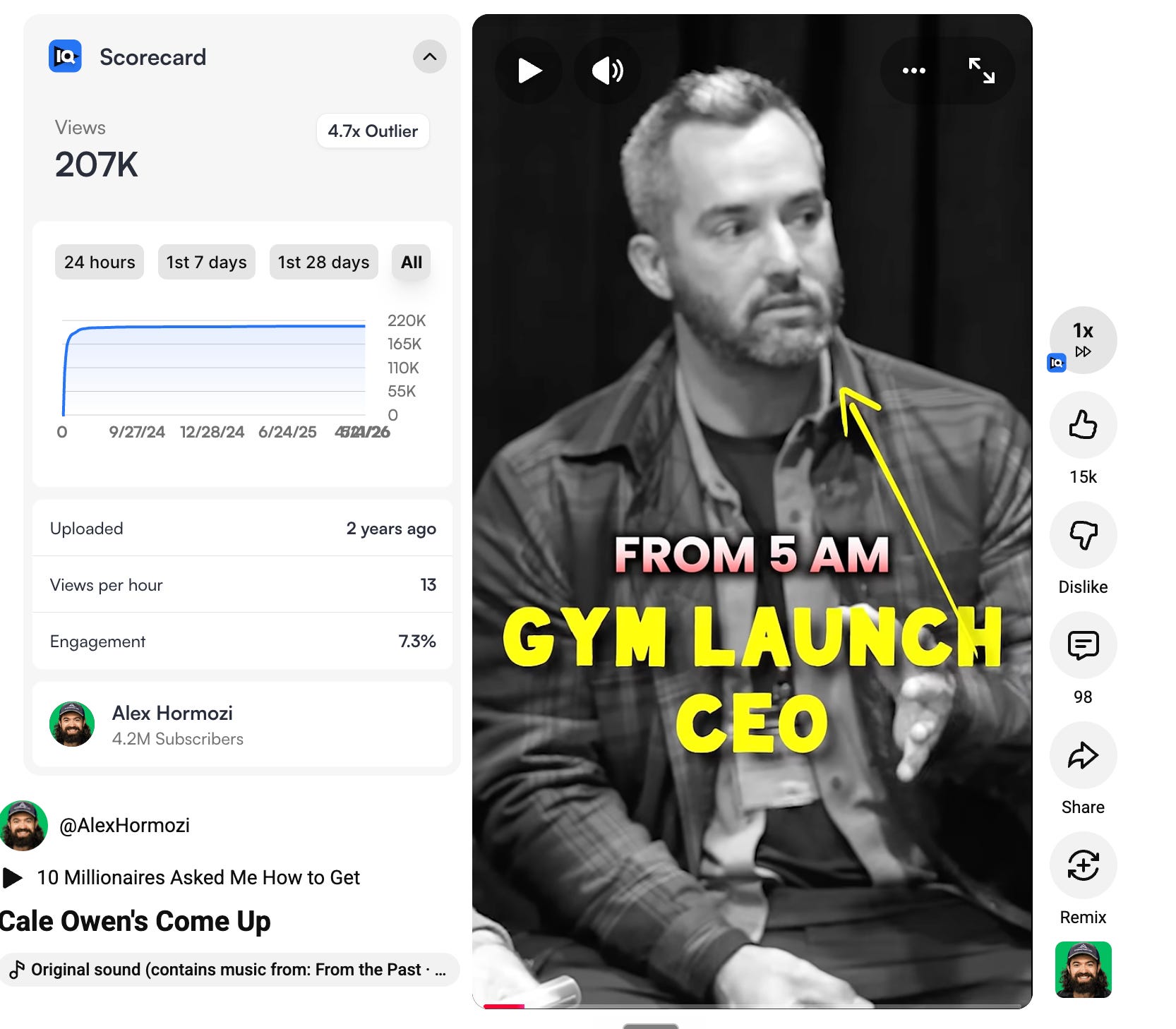
He worked alongside Alex and Leila Hormozi for about ten years at Gym Launch, and his talk was mainly about how to decide what to do next in your business.
It was basically about decision-making frameworks. And to be honest, I found this insanely useful, because I feel like, especially in this space, everybody is always fucking looking for the next hack.
The next content strategy.
The next ad strategy.
The next follow-up thing.
The next thing to bolt onto their webinar.
The next diamond in the dirt.
And obviously, some of those things matter, and I am not saying strategy does not matter, because it clearly does. But at some point, it is like, bro, do you actually know what your team did today?
Do you have systems built?
Do you have a structure built?
Do you know what is actually happening inside your business, or are you just constantly looking for the next shiny thing while ignoring the massive truck of diamonds driving right past you?
Do you know what I mean?
And I think the biggest takeaway for me here is that, oftentimes, you don’t know what the next best move is.
Dakota Hermes - Ad Class | Creative Formats & Tonality
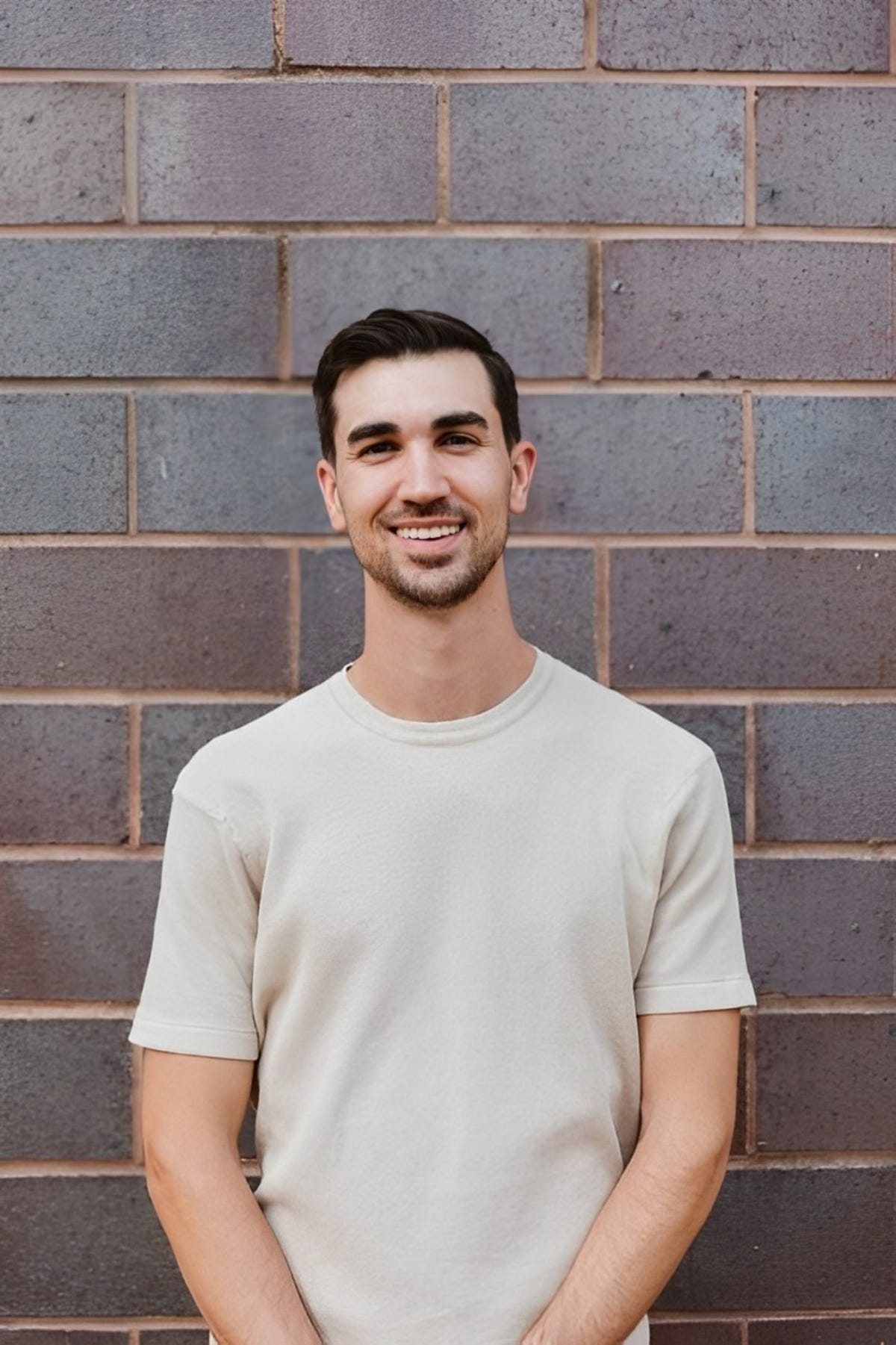
Dakota runs a very successful advertising agency, called AdClass and from what he said, they are spending millions of dollars a month across Meta, YouTube, and Google for info businesses.
He was talking about the different funnels he is seeing work well at the moment.
And obviously, the bit that was reassuring for us is that he said webinars are working really, really well for his clients.
That is always nice to hear, because of course, we are in the webinar business ;)
So when someone who is spending that much money across that many accounts is saying that webinars are still working, it is a pretty good sign that we are in the right vehicle.
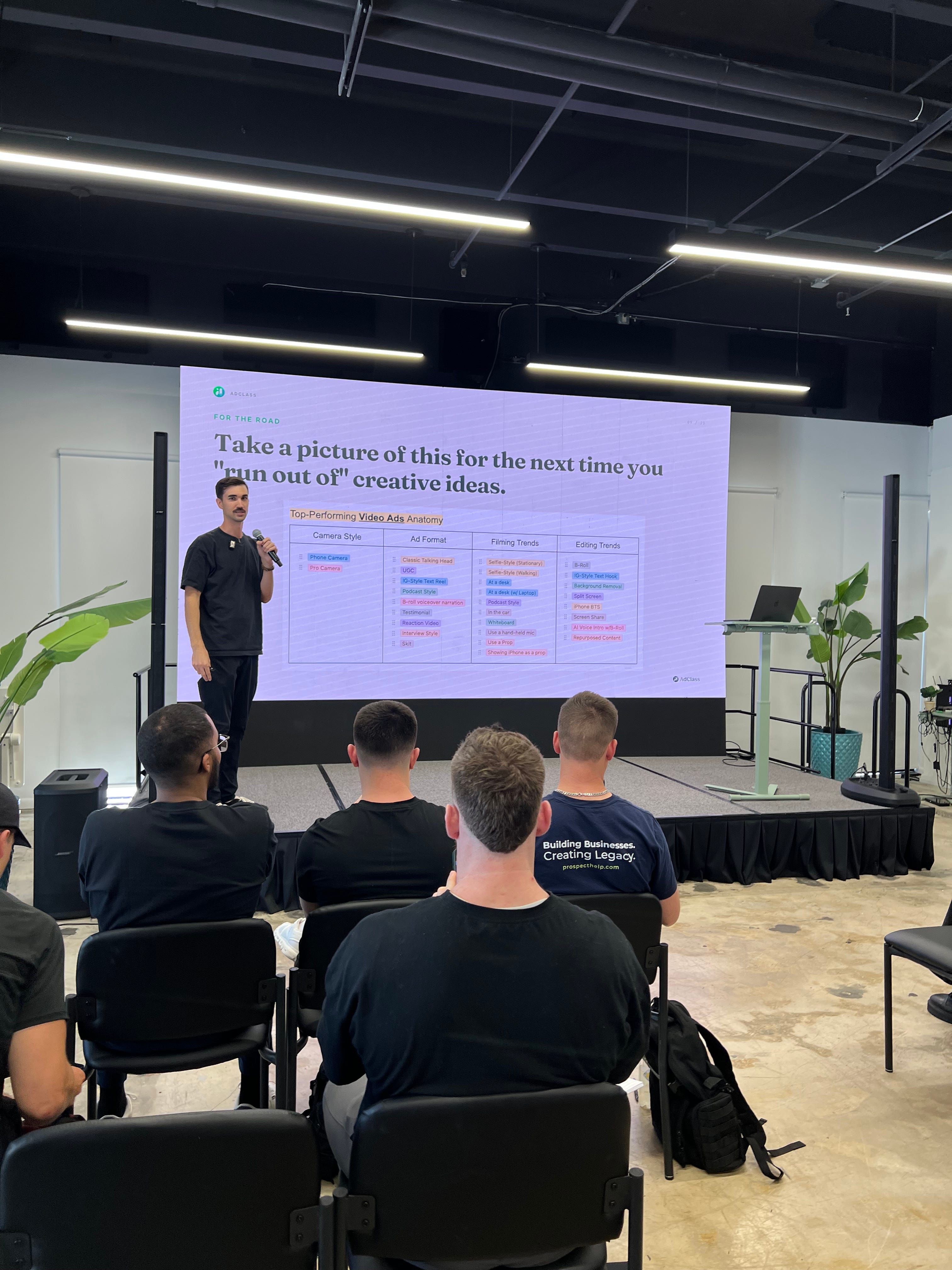
But one of the main things he drove home was creative formats.
We already know that Andromeda requires a lot more creative diversity. We have known that for a while, and to be honest, most people in the ad space should know that by now. If you do not know that by now... idek.
But what was useful is that he actually gave a list of creative formats that we can now go and implement for each client, and then build standard operating procedures around.
It was not just, “you need more creative” because everybody says that. It was much more practical.
Why Tonality And Presentation Matter In Ads
One thing Dakota also mentioned, which I thought was really interesting, was the impact of tonality and the actual presentation of the ad.
Because obviously…
✅ You can write the best ad copy in the world.
✅ It can be Andromeda-proof.
✅ It can be filmed in a different location.
✅ It can technically tick all the boxes.
But if the way the person presents it is off, the delivery is completely different and if the delivery is completely different, the quality of the ad can tank.
That is something I think we need to focus on more with some of our clients.
It might mean us going out there and helping them film properly.
It might mean getting a freelance videographer to go and film with the client.
It might mean making sure they are actually following all the standard operating procedures, rather than just sending them a script and hoping for the best.
And it makes so much sense as well, because we put so much emphasis on this for the actual webinar itself. I myself know first hand, from moderating God knows how many webinars now and funnel hacking so many webinars…
Just HOW much of a difference it actually makes when the presenter has their tonality dialled in. It’s exactly the same on the ads, and it’s exactly the same on the VSL.
I don’t put the same amount of emphasis on it as I should, and potentially this is a learning lesson for yourself as well if you run ads or even just for your own business, for your own marketing material.
Bonus:
The other interesting thing he said was that, unless you are spending something like $300,000 a month on Meta profitably for webinars, you probably do not need to start looking at YouTube yet.
That was useful, because some of our clients have obviously been interested in diversifying ad platforms and I am not saying they should not do that forever, but it was good to have some sort of framework for when it actually makes sense, instead of just diversifying because it feels clever.
By The Way…
If you want to start doing webinars or improve the webinars that you’re doing at the moment, then you can work with me and my team either on a done-for-you or an advisory basis.
If you want to know…
How we’d run the webinar for you
What improvements we’d make If you’re currently running them
How we’d structure the offer
How we’d run the ads / how we’d get people there / how often we run it
And what you think you should do for your business in your specific situation
Daniel Fazio - Client Ascension / ListKit
One of the biggest things I took away from Fazio, which was something that is in our realm of expertise, was just quite how fucking insane and powerful challenge funnels can be.
If you do not know Fazio, he sells an offer called AI Assisted Agency, and from what he said, I think he did about $1.4 million last month split between ListKit and Client Ascension.
What was interesting is that for both companies, he is doing some form of one-to-many.
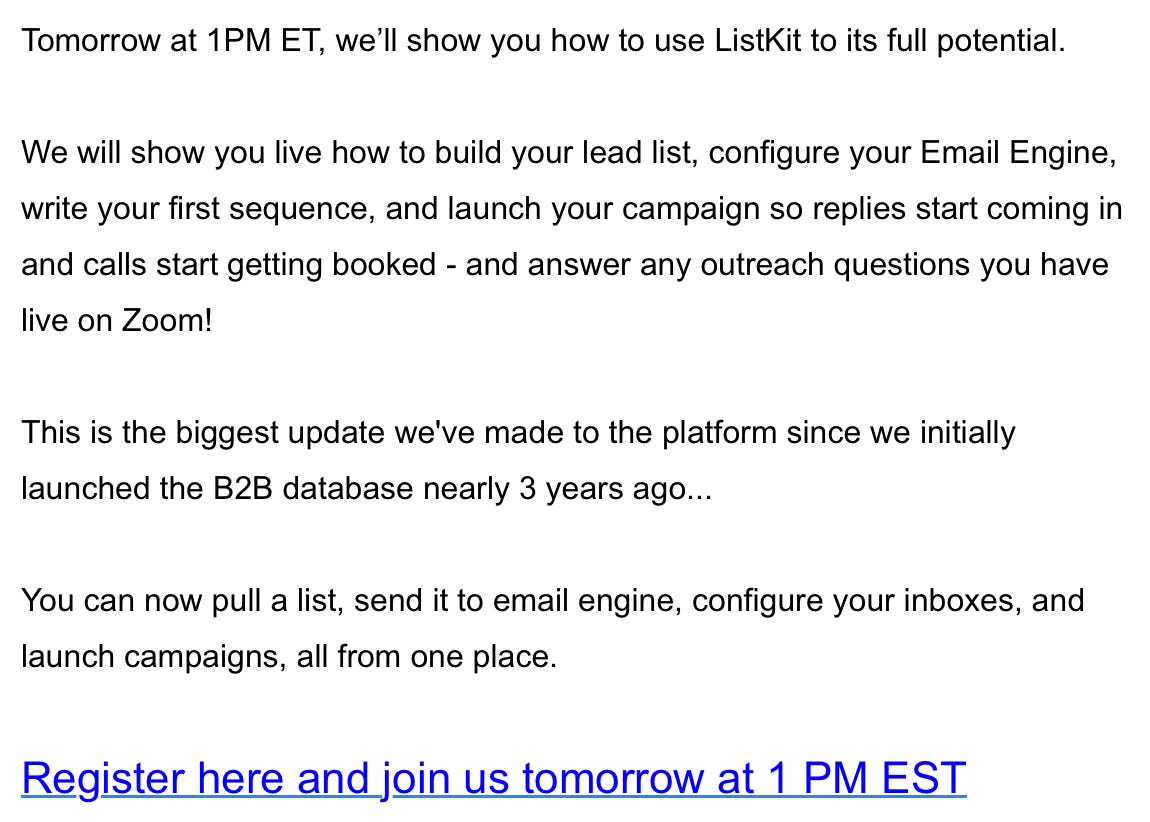
For ListKit, I believe they are running biweekly webinars.
For Client Ascension, he said one of the main drivers is challenge funnels.
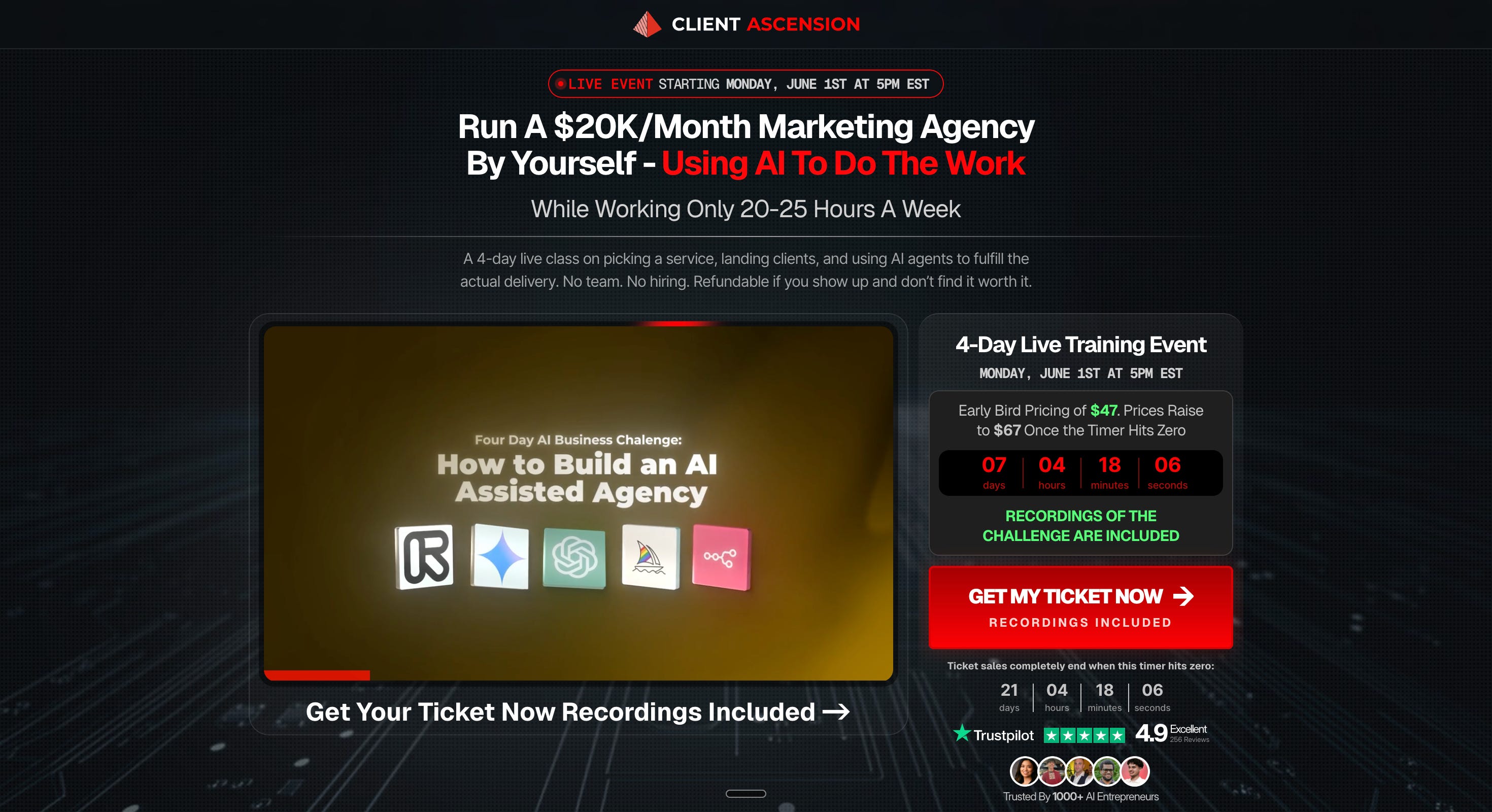
They implemented a challenge funnel for Client Ascension around a year ago, and they have now also implemented a challenge funnel for Olympia, which is his higher-ticket programme.
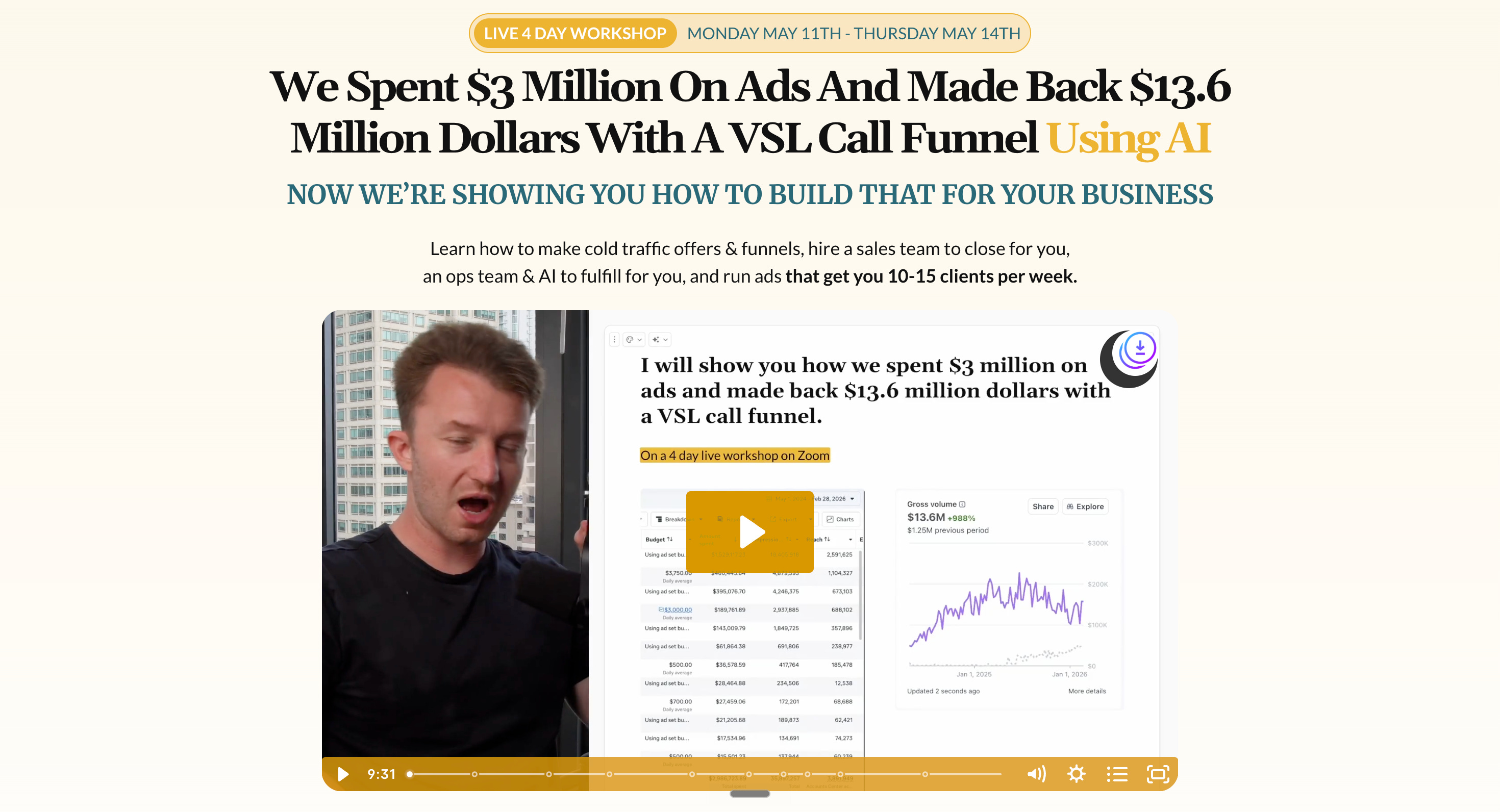
I think he said Client Ascension did something like $500,000 in a week from one of these challenge funnels, which is obviously crazy.
But the main thing it shows is the power of one-to-many at every level.
It is not just webinars to cold traffic every week. It is one-to-many in different forms, used in a way that suits:
The offer
The price point
He also acknowledged that webinars are great for offers around $4,000 to $6,000, which is funny because that is primarily where most of our clients’ price points are.
The audience
He does not feel like the quality of the lead is always exactly what he wants for something that is around $12,000.
And the way the founder sells.
For example, Fazio was saying that a webinar does not really feel like enough time for him.
So this is not a case of challenges are better than webinars, or webinars are better than challenges.
It is more that different one-to-many mechanisms suit different offers.
For Fazio, he wants more time.
It works well with him and his business partners.
It fits the way they sell.
So that was a really interesting takeaway for us, and it is potentially something we are going to look into more with challenge funnels.
Side Note: If you want to be our first-ever challenge funnel client, we’ve done over 4 million webinars. If you want to run a challenge with us, we’ll do it for you for the same price as webinars, even though there’s way more work just to test it. If you think your offer will work for it.
Evan Seech - Sell More Online
The fourth big takeaway was Evan’s talk on offers.
Evan gave us a really good offer checklist for how to optimise offers for cold traffic.
One thing that I think: this isn’t necessarily a takeaway that I took from it, but I think it’s a takeaway that’s probably most valuable to most of you watching this.
If you actually run your own coaching business, you sell your own courses, or you work with clients or whatever, you need to understand that there is probably a high likelihood that the offer that you’re currently selling organically won’t work on paid.
Now, that’s fine…
… But what’s not okay is running ads to the systems that are working for you organically, and then being surprised when they don’t work on paid.
You have to be a far more skilled marketer, and you also need far more skilled salespeople in order to actually crack this. The numbers aren’t going to be as sexy as what you’re used to from organic, and it might panic you in the beginning. You need to understand that you are putting money in and getting money out.
With organic, you’re still putting something in. You’re putting your time in. You’re putting the time of your editors in. You’re putting the content production time. It’s just a different cost.
It is a completely different game.
It is like when people talk about the step up from the Championship to the Premier League.
It is only one division, but the difference is huge.
That is what cold traffic is like.
You are still selling the same thing, but the standard of framing, proof, clarity, positioning, and immediate perceived value has to be so much higher.
Jeremy Haynes - Megalodon Marketing
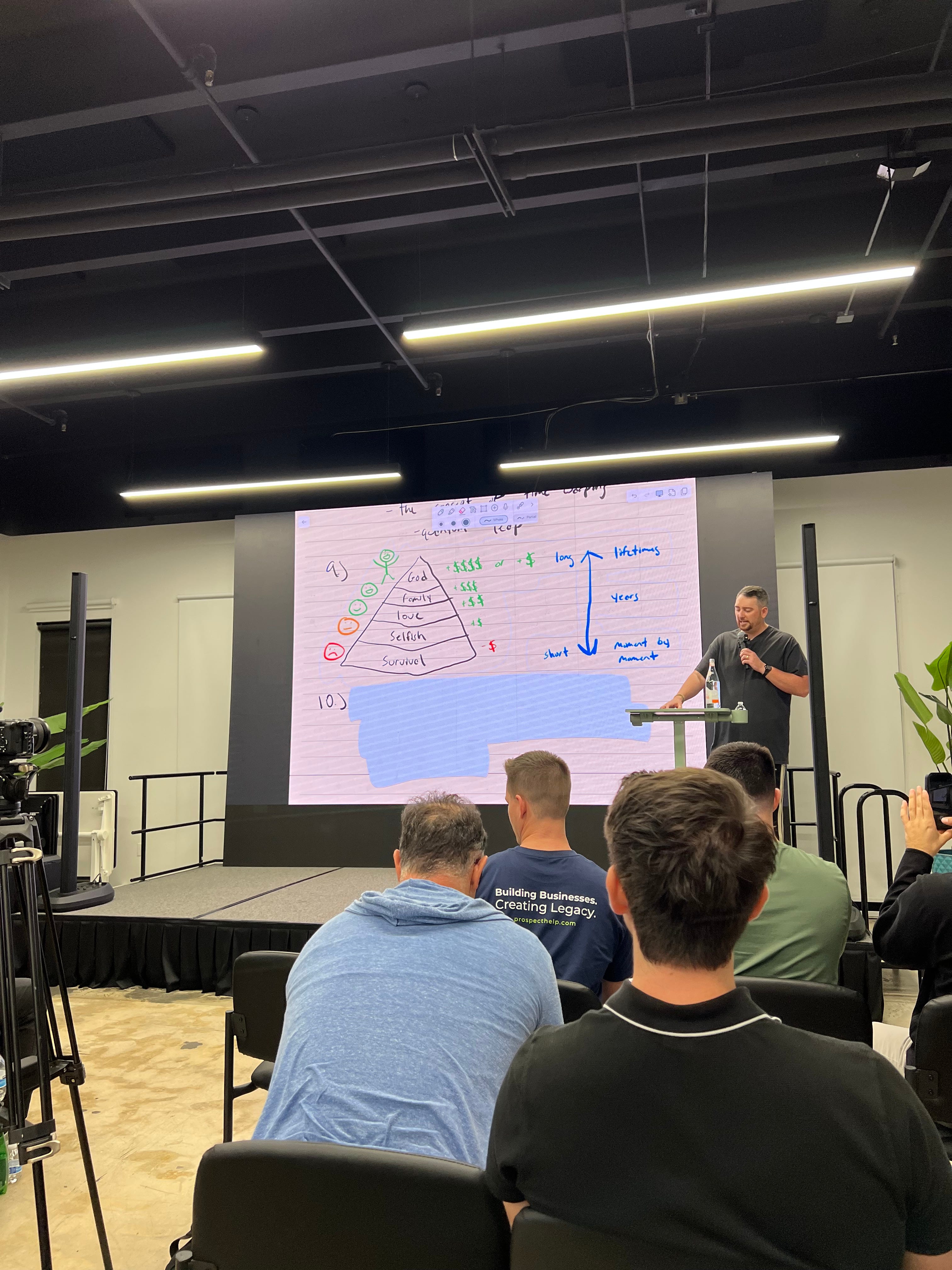
He has posted the talk on his YouTube, so you can go and watch it, but I do not think it is anywhere near as impactful as actually being in the room.
Last but not least, we had the big dog, Jeremy Haynes, who was one of the final speakers of the weekend.
He did not really talk tactics because he was talking more about what it actually takes to get to a million dollars a month from a mindset perspective
One of the big takeaways from that talk was that the quality of the people dictates the quality of everything.
That applies to…
Clients
Team members
Your network
The culture you are building
And that made me think a lot about where we are trying to take Webinar Wizards because we want to be one of the top people in the webinar space…
Not just now but in 5, 10 years as well and and I genuinely believe that if we outlast everyone, which I believe we can, then we will become the best in the webinar space.
And the best in any space, especially from a service-based perspective, are the ones who work with the best clients and have the best team.
And the reason that feels like such a mountain of a task at the beginning is because it is almost like trying to get a merry-go-round going when there is a fat kid on it.
At the beginning, you are pushing it and it barely moves because the kid is so heavy.
But as soon as the thing gets going, the same weight that made it difficult to start is the thing that makes it impossible to stop. That is how I think about this anyway lol, it is all about getting the flywheel going.
The reason a lot of people stay stuck working with mediocre clients, attracting mediocre talent, and doing mediocre work is because they never actually set the intention to attract better people.
They never build the flywheel.
They never get the big boy case studies.
They never attract the big boy A player.
They never go out and build the network, build the connections, and build the relationships with people who are genuinely operating at a higher level.
And if you do not do that, you just stay in the same loop.
You’ll have the same clients doing the same numbers. You’ll have the same team with the same skill level. You’ll be producing the same quality of work at the same standard…
And then you wonder why your business isn’t growing, why good people don’t want to work for you, and why your clients aren’t making any more money than they were five or six months ago.
If You Want To Know What A Webinar Would Look Like For Your Business…
… Or How You Can Improve Your Current Webinar, Then Let’s Speak.
Here’s How Our Process Works.
You Book A Call With Us Via One Of The Links In The Description.
Note: If you aren’t sure which you want (done-for-you or advisory) then just book through the done-for-you. If you’re an operator and you want to do this for your clients, book through advisory 100% of the time.
On The First Call, Our Aim Is To Understand As Much About Your Business As Possible So We Have Context.
What Is Your Offer
Where Are You Getting Traffic
What Funnels You Are Running
Company Identity
Why Webinars In The First Place?
Me & My Business Partner Marcus, Go Away & Build A OTM Strategy Plan.
Offer Checklist
The Strategy We Think Will Suit Best
Webinar Core Theme & Promise
Cadence, Traffic Sources & Format (Live, Auto, Challenge)
On The Second Call
We Present The Plan To You
We Align On Strategy
We Show You Where We Believe We Can Add The Most Value i.e. DFY, Advisory, Hybrid
We Either Come To A Working Agreement, Or We Move On.
Why Do We Do This?
Reason #1: No Two Businesses Are The Same.
There are plenty of people who will tell you that they can build your webinar in seven days, but what do you actually think the quality of that is going to be like? Do you think they’re just going to tell you what they tell every other business who comes to them? Potentially.
From what we’ve seen, and we’ve seen a lot, the quality and the success of a campaign largely come down to the planning done beforehand. Every campaign we build is bespoke.
Our planning for your webinar starts before our working relationship even begins, so you have a full expectation of how we would execute on this for you.
Reason #2: It Allows Us To Come To An Agreement That Is Aligned For Both Parties.
We work with only a handful of clients on a done-for-you basis and have no interest in consulting or doing work with people who are unserious, who are incompetent, or who are going to be a pain in the arse to work with.
This call is as much for you to get educated on us, as it is for us to familiarise ourselves with what working with you might be like. Almost every client interaction or client relationships I’ve ever had that I felt drained of my energy and my team’s energy, I could have spotted it during the first conversations, which is largely why we have this process in place.
Let’s Talk Directly. Book A Call With Myself.